Shared History
Some of the earliest evidence of plant cultivation in Panama dates back to around 5000 to 7000 B.C.: corn, squash, cacao, and root crops like cassava. In the early 16th century, Spanish settlers introduced livestock, followed by export crops. American companies, such as United Fruit, expanded the cultivation of export crops, and agrochemical companies spread their products throughout Panama's agricultural sector during the 20th century. Mandela is helping make the 21st century a time when humanity returns to its agricultural roots, based on the indigenous origins of agriculture, building healthy soils where roots nourish crops for the well-being of people, and root our food system in both traditional agroecological practices and new ones.
Deep Roots
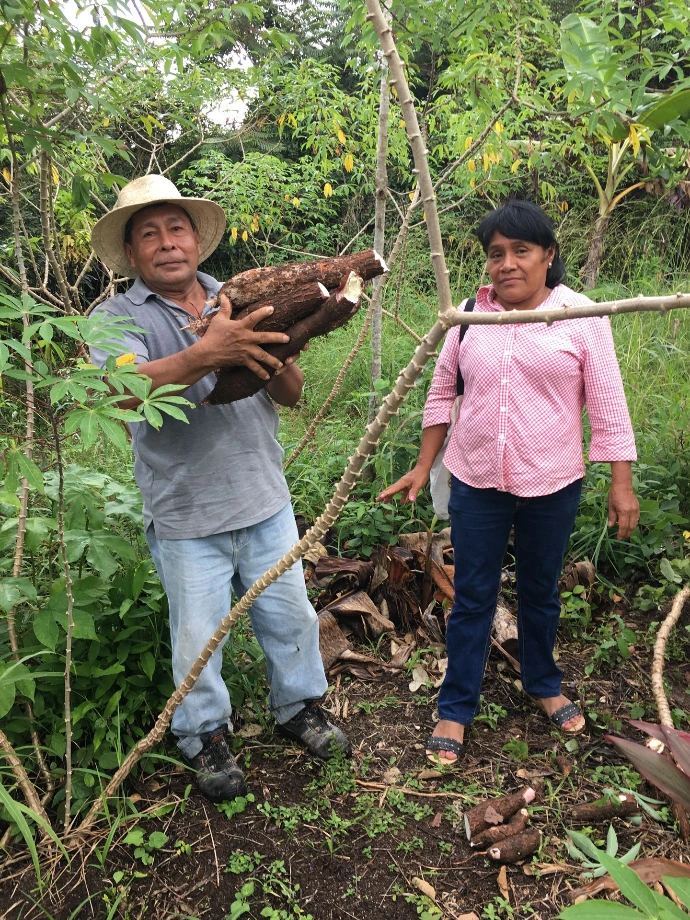
Abundant Harvests
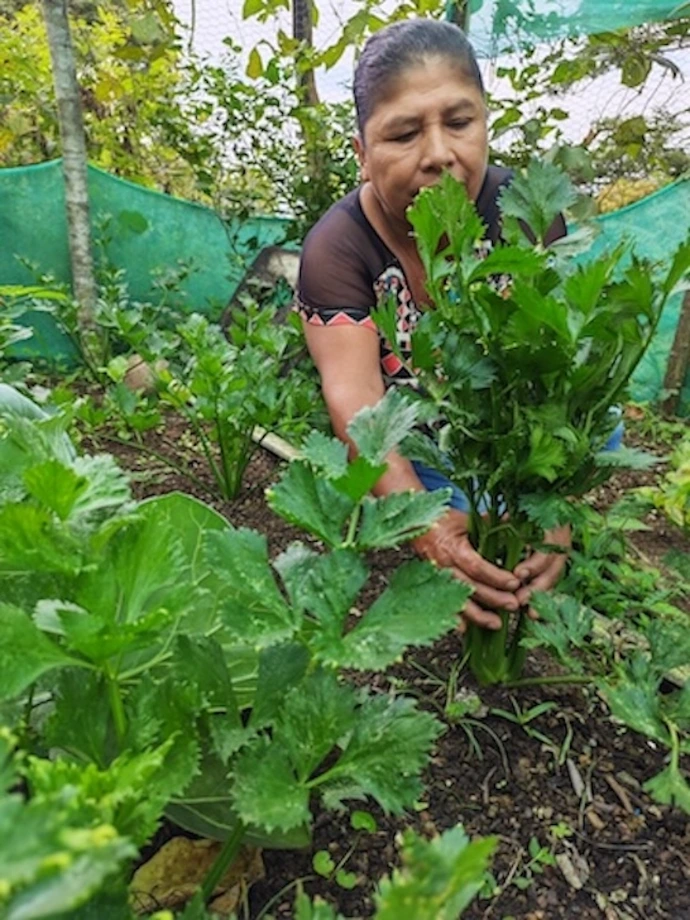
Mandela's Story
Evolving Together
Based on ancestral agricultural wisdom, on the lessons learned during service in the Peace Corps, and on decades of experience in agroecological training, as well as on the knowledge of collaborators from various fields.
Mandela's roots run deep. It's founder, Florence (Flo) Reed, began working with smallholder farmers in Panama as a Peace Corps Volunteer from 1991 to 1993. That experience molded everything that came after.
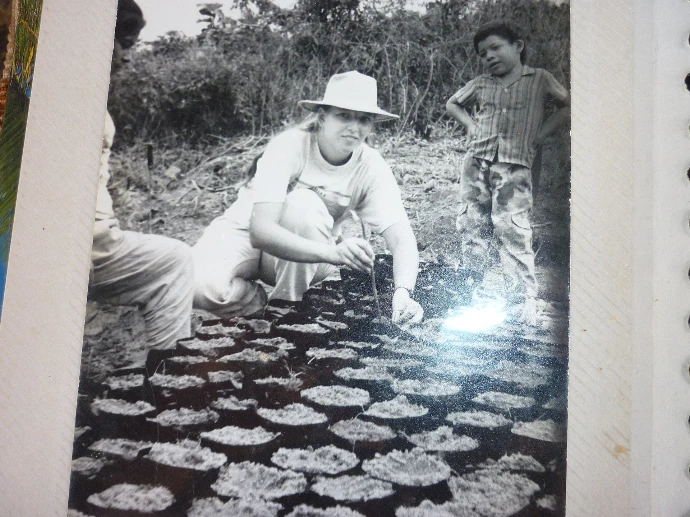
Florence (Flo) Reed planting little trees in a forest nursery in Bella Florida de Santa Rita de Antón.
Flo founded the nonprofit organization Sustainable Harvest International (SHI) in 1997, which provided agroecology training in Panama and other Cenrtral American countries for over two decades.
Daysbeth Lopez joined the SHI team in 2006 and soon distinguished herself as one of the best technicians in the organization in all aspects.
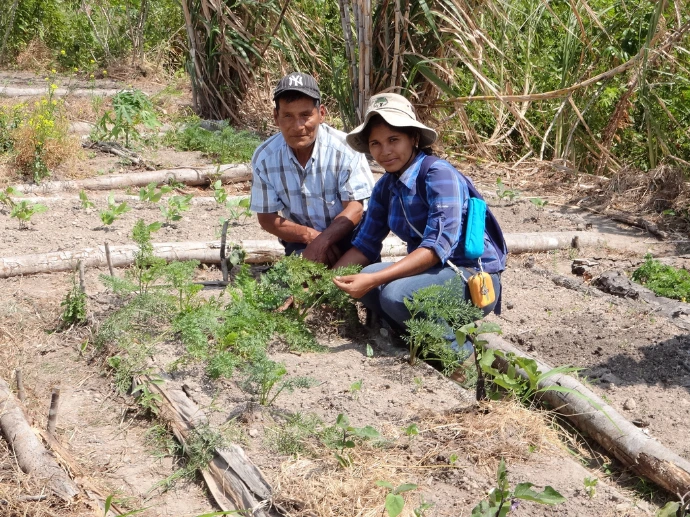
Abraham Sanchez exchanging knowledge with Daysbeth Lopez in 2016.
In 2024, the board of directors of SHI decided to concentrate the organization's operations in Honduras, which is why SHI's programs in Panama came to an end. Around the same time, Flo began to develop a new model — one that incorporated the market access tools and income diversification that she considered essential, built as an independent business rather than a nonprofit organization. Daysbeth, Rubiel, and Kellys, with whom Flo had worked for years, joined her to build this new business.
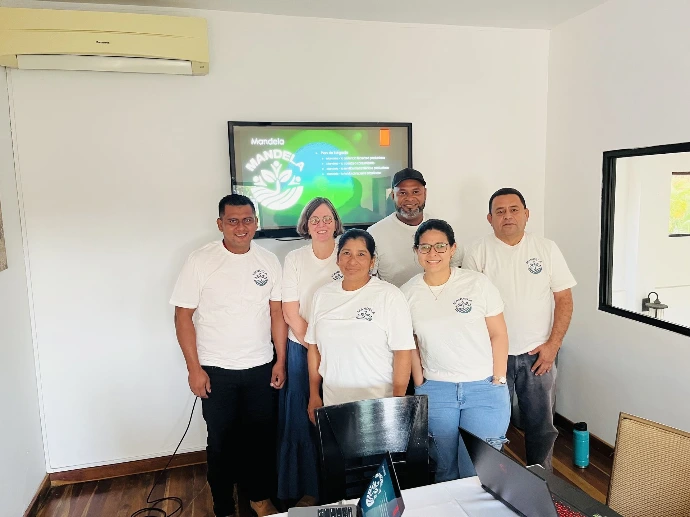
First in-person meeting in February 2025. Front row: Kellys, Yasmin, and Ediberto. Back row: Rubiel, Flo, Cesar. Absent from the photo: Daysbeth.
Mandela was established as a "benefit corporation" in the state of Maine in February 2025, followed by the creation of its Panamanian subsidiary, Mandela S.A., in March. By August, Mandela S.A. had already hired its first staff in Panama. Based on a consumer survey and discussions with producers, Mandela finalized initial plans for operations.
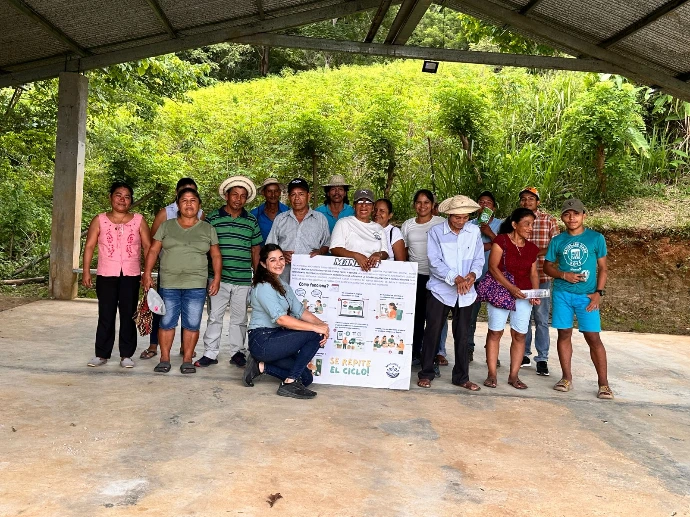
Mandela staff in a meeting to explain the business concept to producers and listen to their ideas and concerns.
In October, Mandela celebrated the launch of operations. By November, a first version of the digital market was already operational; likewise, technical assistance to farmers had begun, who, for the first time, were able to access seeds and other inputs through Mandela.
Mandela is an independent business, not a continuation of SHI. Flo left the staff of SHI at the end of 2025, but remains connected as an ambassador and member of the advisory board.
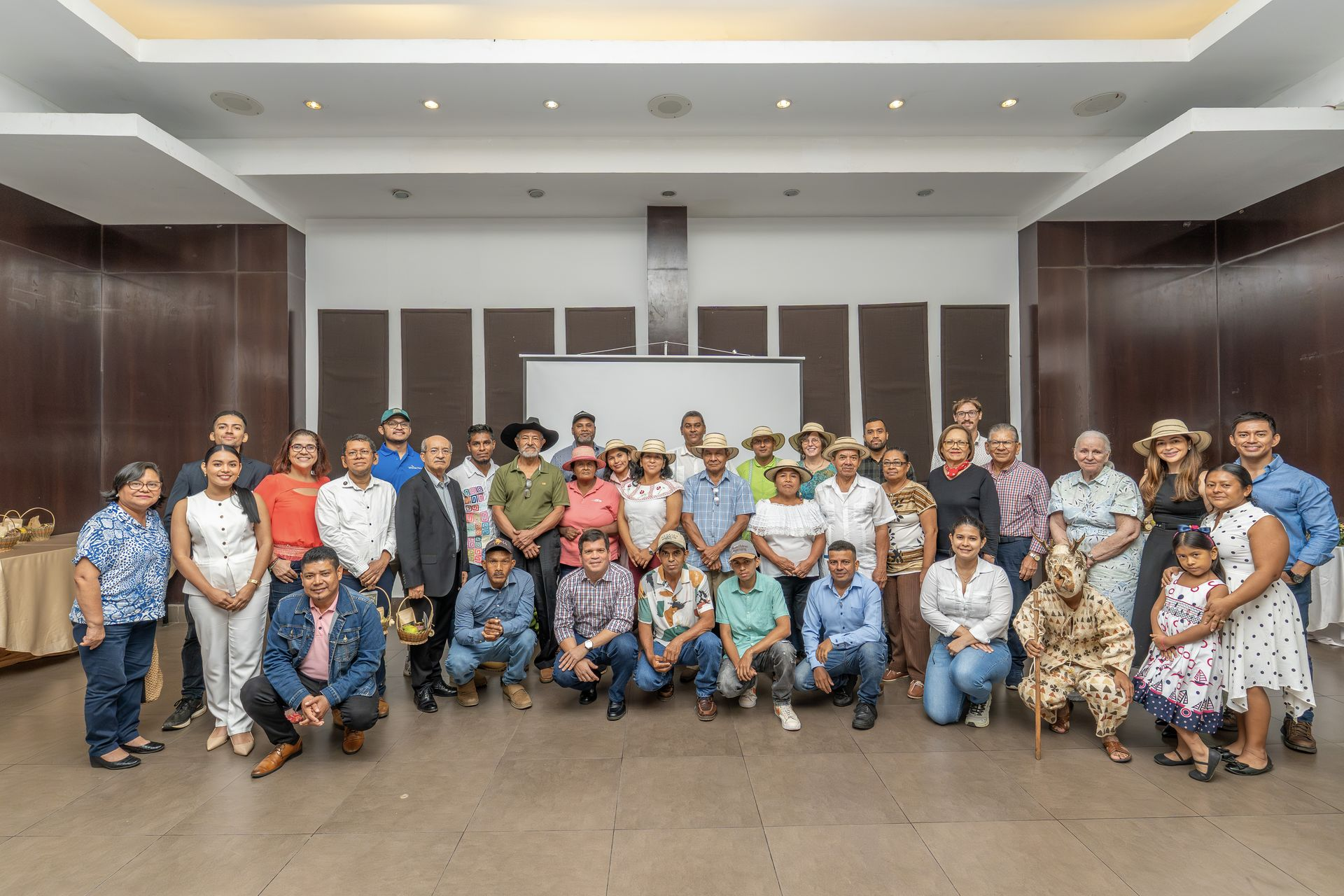
Launch party for Mandela at the Hotel Coclé in Penonomé on October 17, 2025.
In May 2026, Mandela launched a completely redesigned version of its Shared Market, a significant step towards the integrated, scalable model the funding team proposed to build. With a link to its farm, each product will create conections between farmers and buyers. At the same time, Mandela's staff continue providing agroecology technical assistance and access to agroecology supplies.
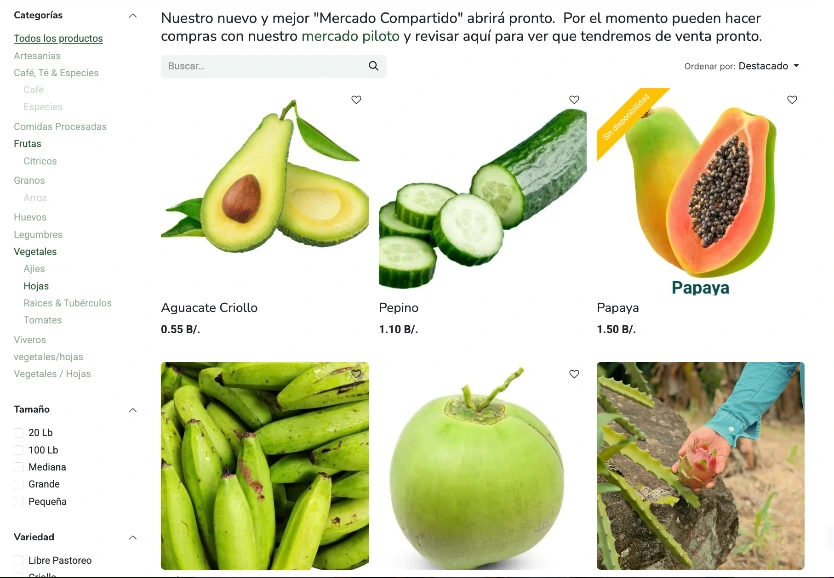
New Shared Market when launched in May 2026.